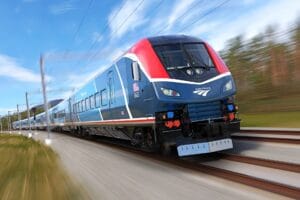
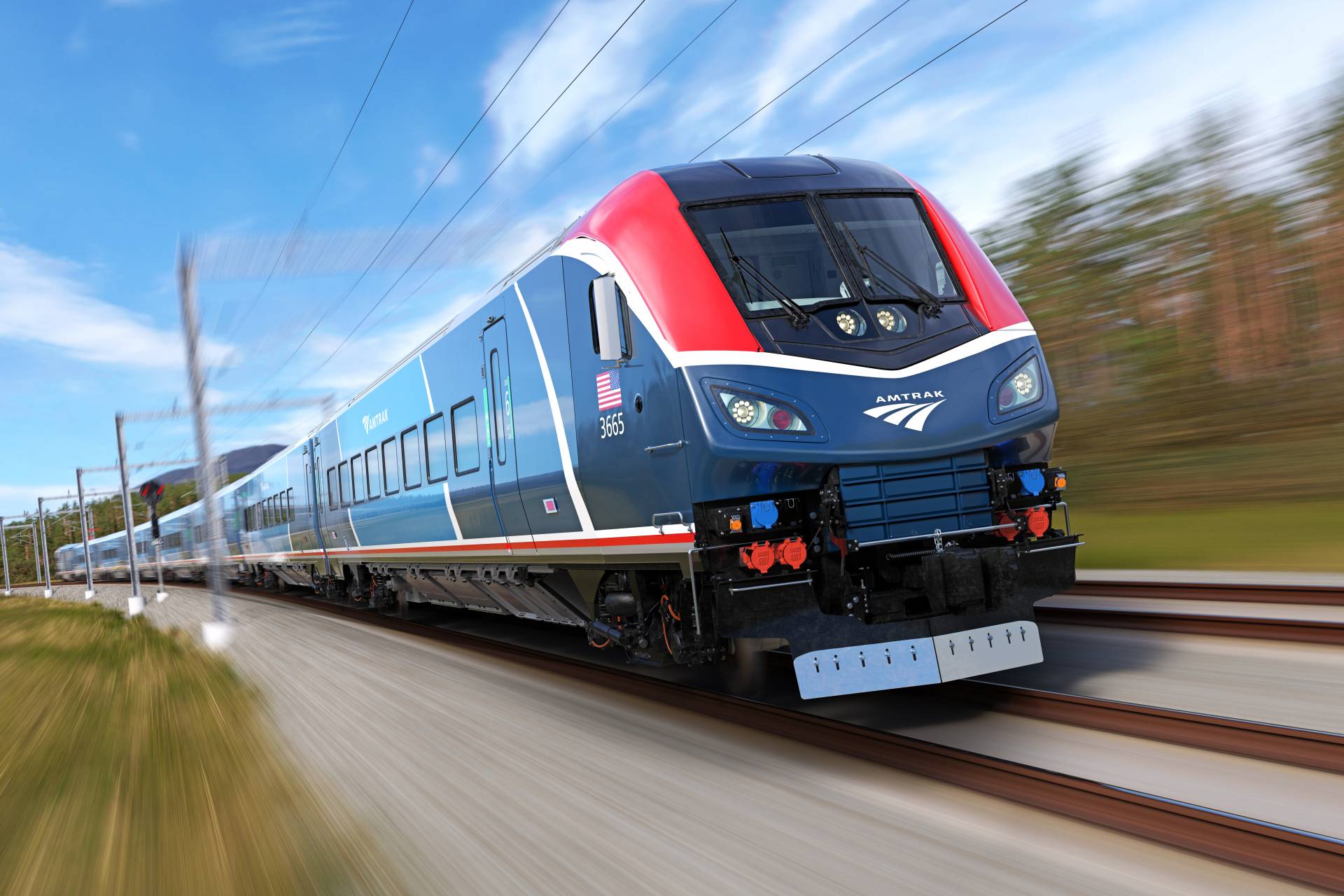

Amtrak is working to increase capacity on the busiest rail corridor in North America by ordering longer trains for the Northeast Corridor.
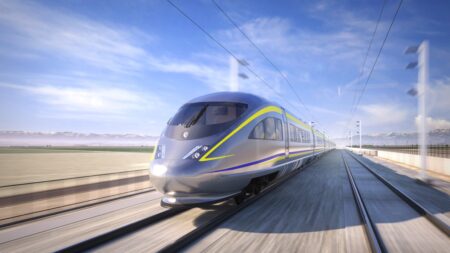
Last week, Amtrak announced it would expanding its Airo fleet with eight additional 10-car trainsets to be deployed on the Northeast Regional service, which operates within the Northeast Corridor.
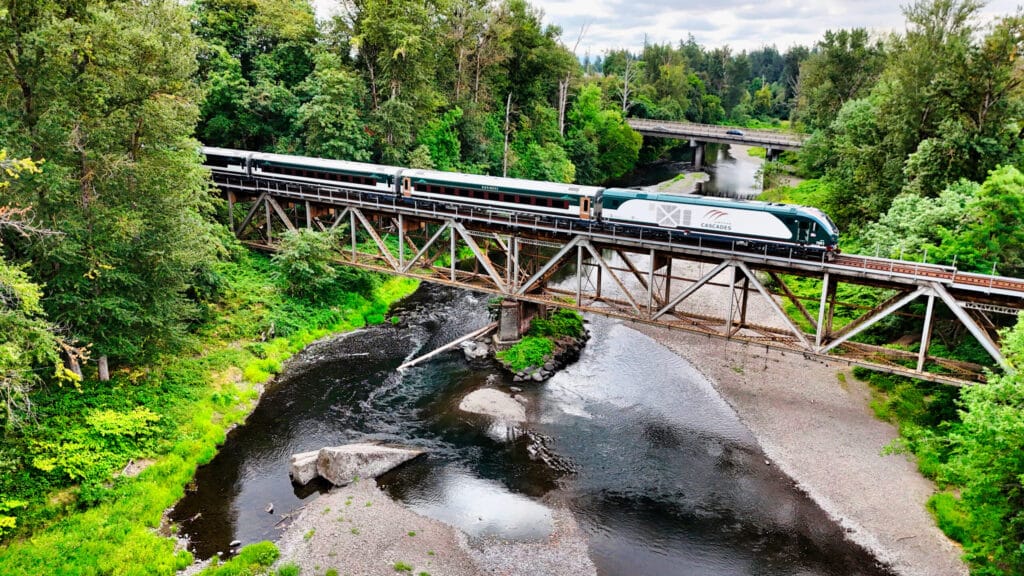
Airo trains are currently only in use on the opposite side of the country on the Cascades route in the Pacific Northwest. Testing is currently underway for the initial fleet of eight-car trains to debut in the Northeast Corridor by late next year.
Read More: CA High-Speed Rail consultants return $1 million spent on restaurants, travel
These higher capacity 10-car trains will be added to the Northeast Regional service by 2031, as railroad officials project growing demand for the regional route.
“Demand for train travel isn’t slowing down, and neither are we,” said Interim President Byl Herrmann. “For our customers, that means more seats, more availability when travel is busiest, and more chances to find a fare that fits their budget.”
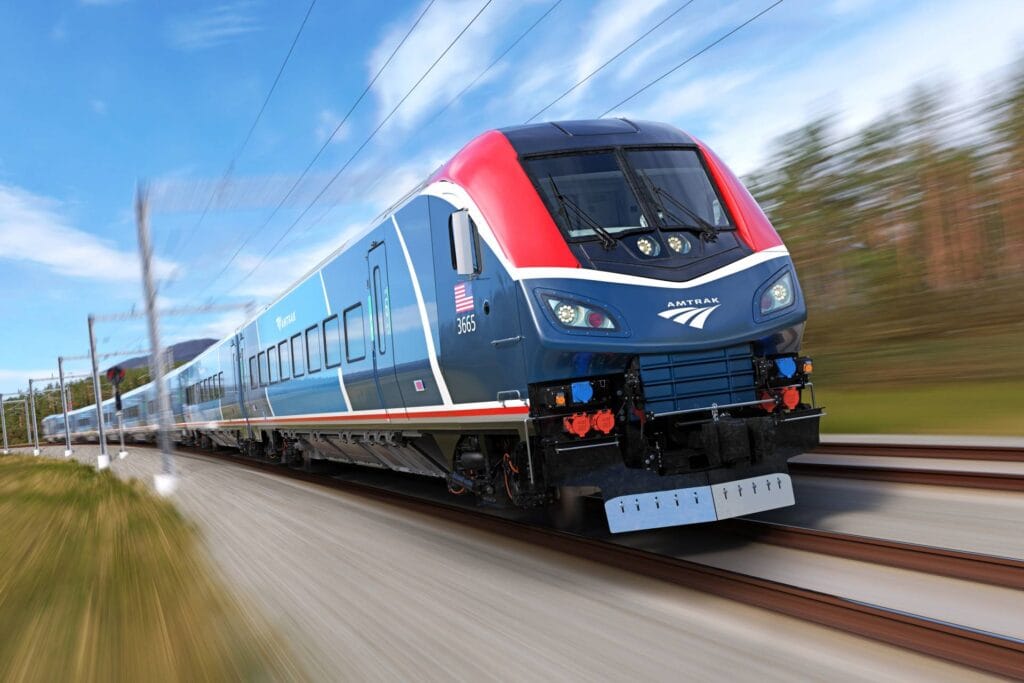
By expanding Airo trainsets from eight to ten, each train will be able to offer 34% more seating while still offering the same Airo experience.
The Airo trains are being manufactured in the U.S. by Siemens Mobility at its facilities in Sacramento, California, and Lexington, North Carolina.
Amtrak is working to modernize
Amtrak is currently in the middle of a multi-year, multibillion-dollar modernization effort that includes upgrading legacy train stations and replacing its aging fleet of vehicles.
Rail executives warned earlier this year that its long-distance routes were in dire straits due to a backlog of maintenance and service requests that could create a transportation nightmare if any large, unexpected disruptions were to take place.
Amtrak has already begun the process of replacing its long-distance fleet with 800 new train cars by soliciting manufacturing proposals, but a vendor won’t be chosen until late next year.
Amtrak reports record ridership on back of NextGen Acela
Despite these significant operational challenges, Amtrak is still reporting high demand for its services. In its 2026 fiscal year, the railroad recorded more than 37 million passengers, an all-time high for America’s Railroad.
A big boon to those ridership figures was the 2025 debut of the NextGen Acela, the fastest trains in America, which operate in the Northeast Corridor between Washington, D.C., New York City, and Boston.

In May, Amtrak celebrated 1 million rides on the NextGen Acela trains in less than nine months of service. Alstom, which built the NextGen Acela, purchased a large property in Newark, Delaware, to serve as its state-of-the-art maintenance and service yard.
Read More: Austin planning airport light rail as a blue wave reshapes Texas
Federal investment into trains and systems have been paying off and ridership totals will likely continue to climb in the coming years.
The decision to expand the Airo fleet is the latest example of Americans re-thinking their commutes and long-distance travel plans, and legislators say investment in Amtrak through the bipartisan infrastructure bill is helping to meet the growing passenger demand.
“Every year, millions of travelers and commuters rely on Amtrak to connect them to cities across the Northeast,” said U.S. Senator Chris Van Hollen (D-Maryland). “We passed the infrastructure modernization law to upgrade dated transportation systems across America, and the expanded fleet of high-capacity Airo trains, supported by $22 billion through that bill, will provide safer, more comfortable, and more energy-efficient rail service for passengers.”
To read the full release, click here.
For more stories like this, follow Rail and Runway on Instagram and Facebook.