

The California High-Speed Rail Authority celebrated another milestone on Thursday, officially marking the completion of six additional structures, including the largest structure bulilt to date in the Central Valley.
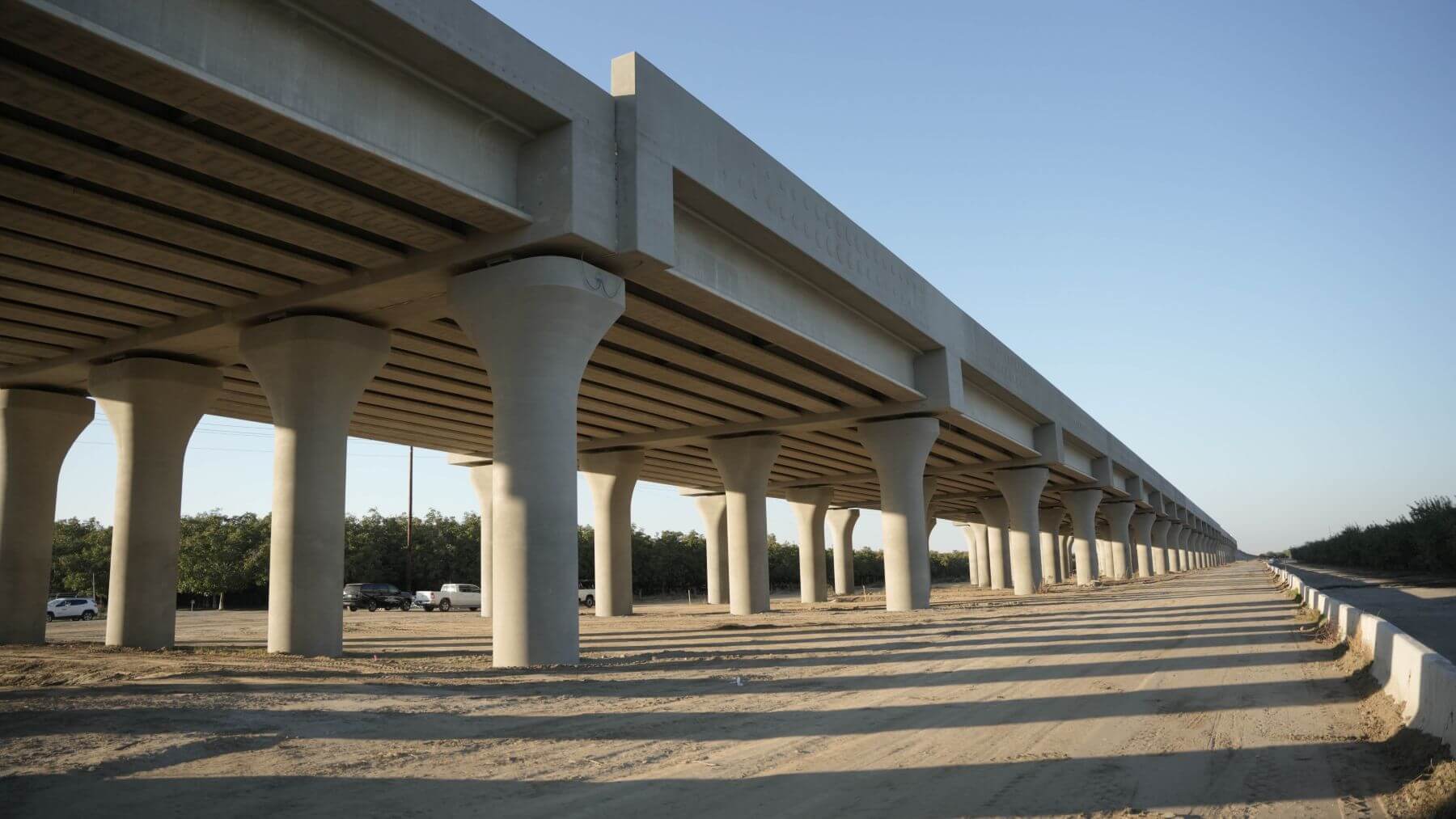
Authority officials gathered in Kings County Thursday morning to cut the ribbon and celebrate the completion of the Hanford Viaduct, the largest high-speed rail structure along the 119 miles of active construction on the initial operating segment.
The Hanford Viaduct is located east of the city of Hanford near Highway 43. The elevated structure is part of the Kings/Tulare Station that will take high-speed trains safely over the San Joaquin Valley Railroad and Highway 198 without a grade crossing.
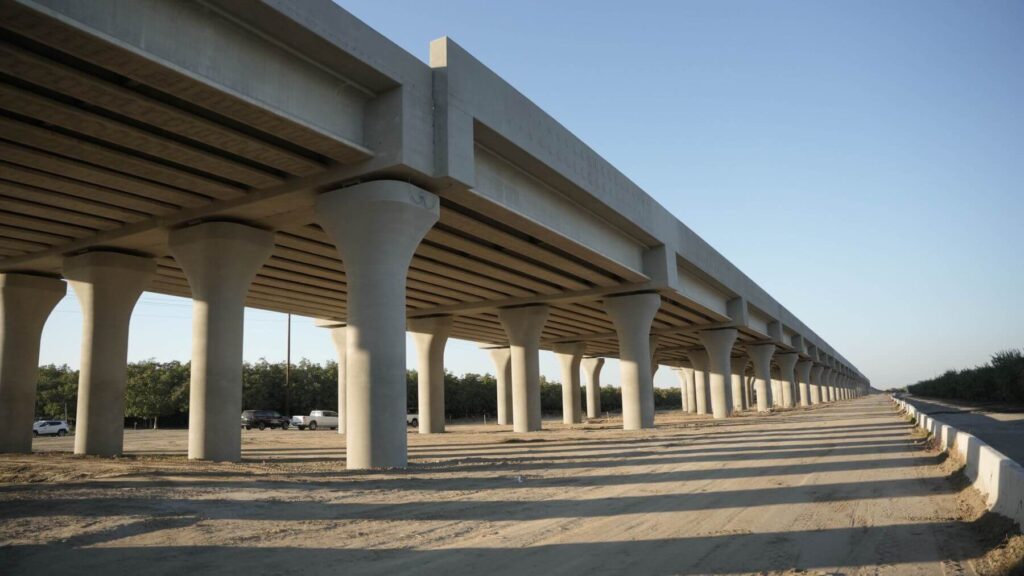
Joe Stephenshaw, interim CEO of the Authority, said the completion of the Hanford Viaduct is proof that the California High-Speed Rail is making progress and “moving from major civil construction toward track installation, trainsets, and the development of our Central Valley stations.”
Stephenshaw said the construction progress has already created more than 20,000 quality jobs that will create a lasting economic impression on the Central Valley and California as a whole.
Read More: Austin starts planning airport light rail as a blue wave reshapes Texas
Kings County Supervisor Doug Verboon said the county appreciates the work of construction crews to build the towering structure, which will “improve safety and efficiency for the community.”
“Thank you to everyone who helped bring these projects and others to completion,” Verboon said.
View this post on Instagram
What has California High-Speed Rail built?
In addition to the Hanford Viaduct, the California High-Speed Rail Authority says five other structures were just completed across Kings, Fresno and Tulare counties.
Located south of the Hanford Viaduct and east of Highway 43, the 450-foot Houston Avenue grade separation will take traffic over the high-speed rail tracks.
Near the Fresno and Kings county lines, the Dutch John Cut Bridge spans 669 feet and is more than 40 feet wide. It will eventually allow high-speed trains to cross over a waterway that shares its name.
In Fresno County, the Conejo Viaduct spans more than 2,200 feet and will take high-speed trains over a local roadway and nearby tracks owned by BNSF. The Cole Slough Bridge east of Highway 43, also in Fresno County, spans more than 317 feet and will take trains over a natural stream.
The Deer Creek Viaduct in Tulare County was also recently completed. That’s another major structure, spanning more than 3,000 feet and taking trains over Deer Creek.
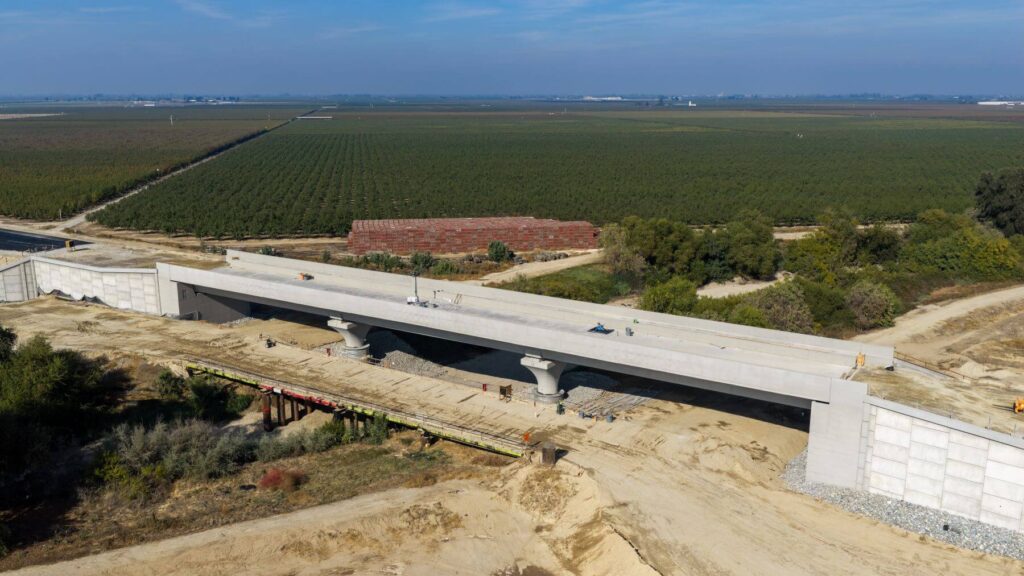
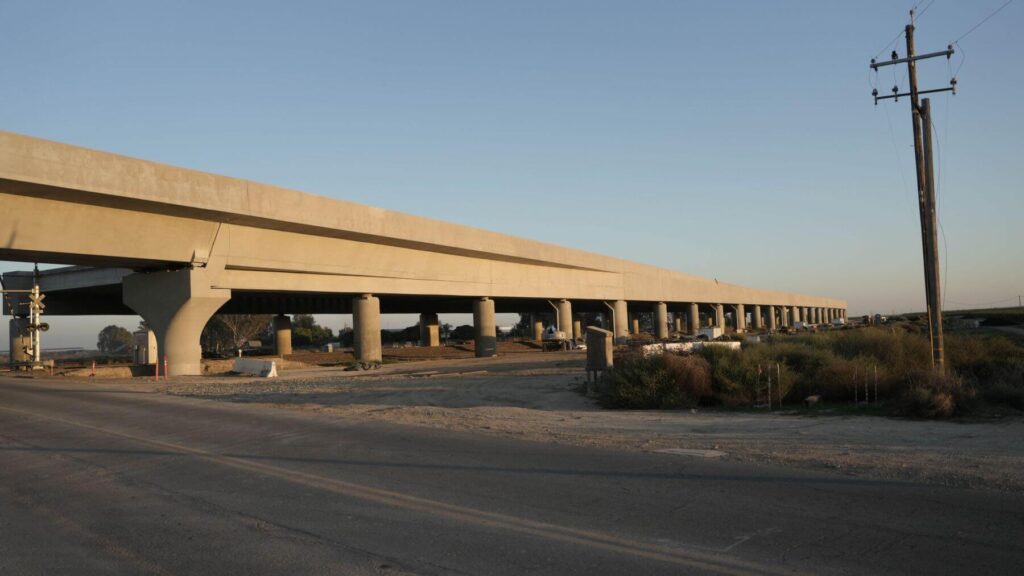
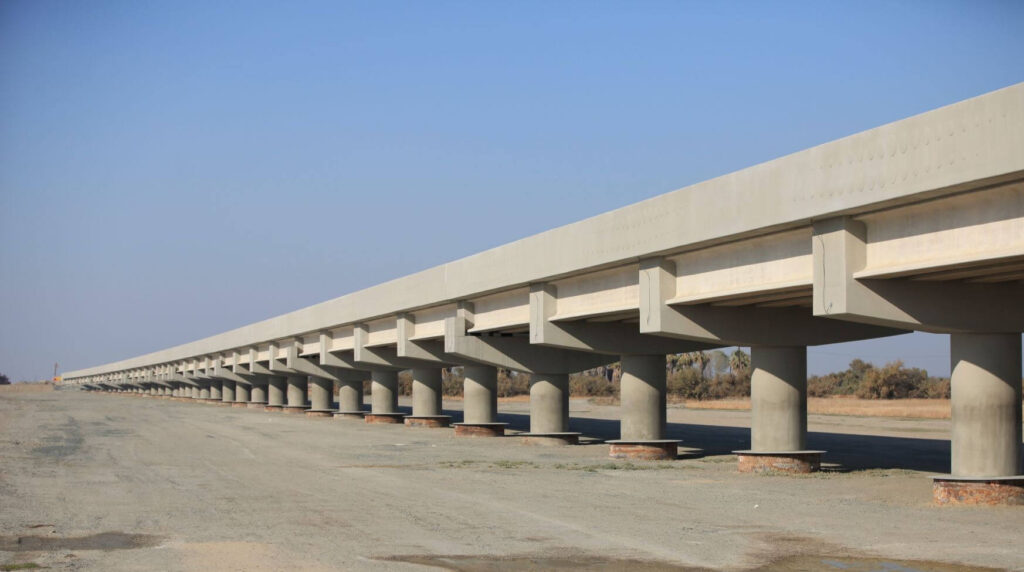
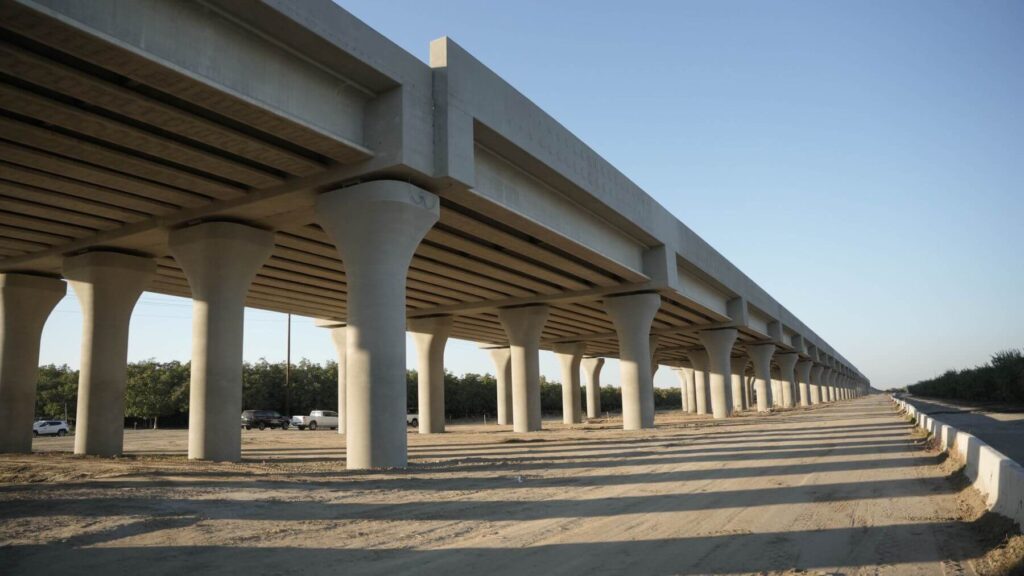
The structures were built with hundreds of pre-cast girders, hundreds of tons of steel and thousands of yards of concrete.
These structures are the best examples of the actual work being done in the Central Valley on the nation’s largest infrastructure project.
Construction crews working on the California High-Speed Rail are getting ready to lay the very first miles of track in the coming months, but track can’t be laid anywhere unless there’s a clear, established track and guideway already built. In that way, laying track is one of the relatively simple aspects of the project when compared to building the massive structures and the significant bureaucratic work taking place behind the scenes.
As it’s been described to me in the past, laying track is akin to putting a roof on a house. The foundation and framing needs to be completed long before progressing to that part of the project.
Read More: Transit and rail are big winners after Election Day
Officials for the California High-Speed Rail say construction work is continuing along the initial operating segment from Merced to Bakersfield, with more than 90 miles of guideway complete and more than 70 structures fully built. There are 22 more structures currently underway across Madera, Fresno, Kings and Tulare counties.
Just last month, the Authority marked two other major milestones: complete environmental clearance for the entirety of 494-mile Phase 1 of the project between San Francisco and Los Angeles/Anaheim, as well as an official order for three high-speed trainsets from Siemens Mobility.
Those announcements were somewhat overshadowed by the sudden resignation of then-CEO Ian Choudri. Stephenshaw was announced as his replacement in the interim and, as evidenced by Thursday’s event, the project keeps rolling along.
For more stories like this, follow Rail and Runway on Instagram and Facebook.