
Construction crews for the California High-Speed Rail are stockpiling the materials needed to finally lay the first section of railroad tracks on the much-maligned project.
Officials for the California High-Speed Rail Authority say the tracks, when laid, will be the “first true high-speed rail track in the United States.”
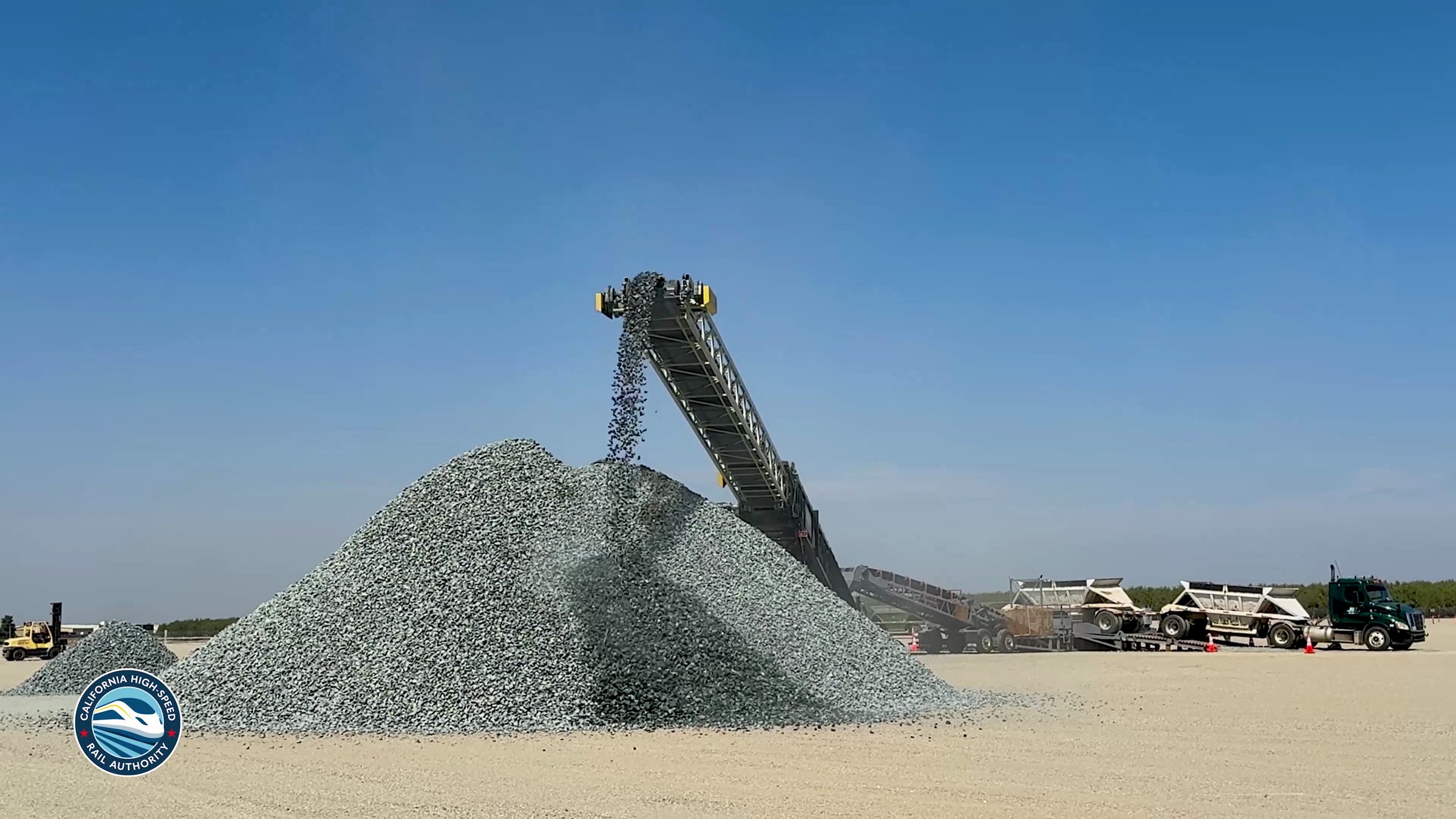
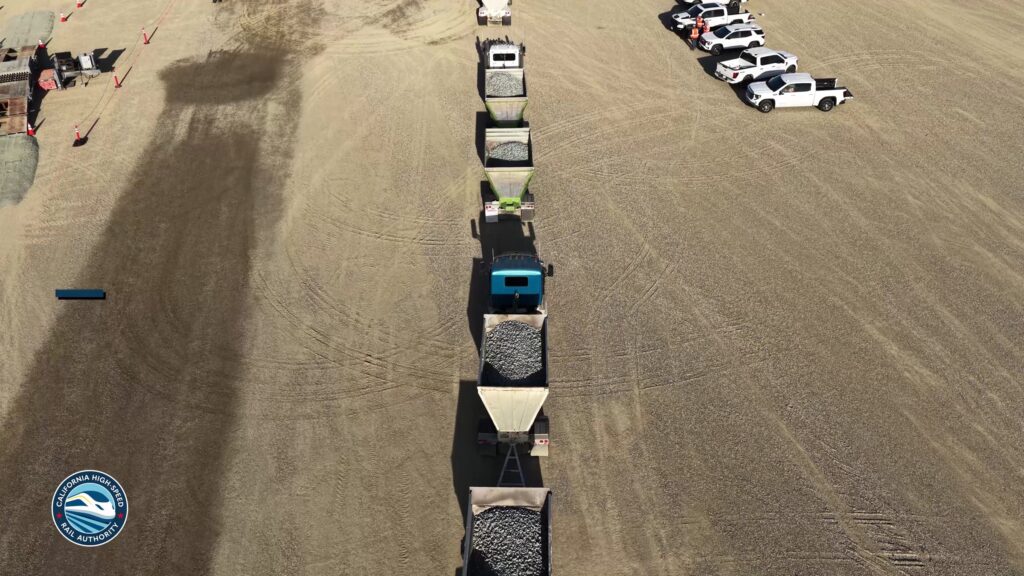
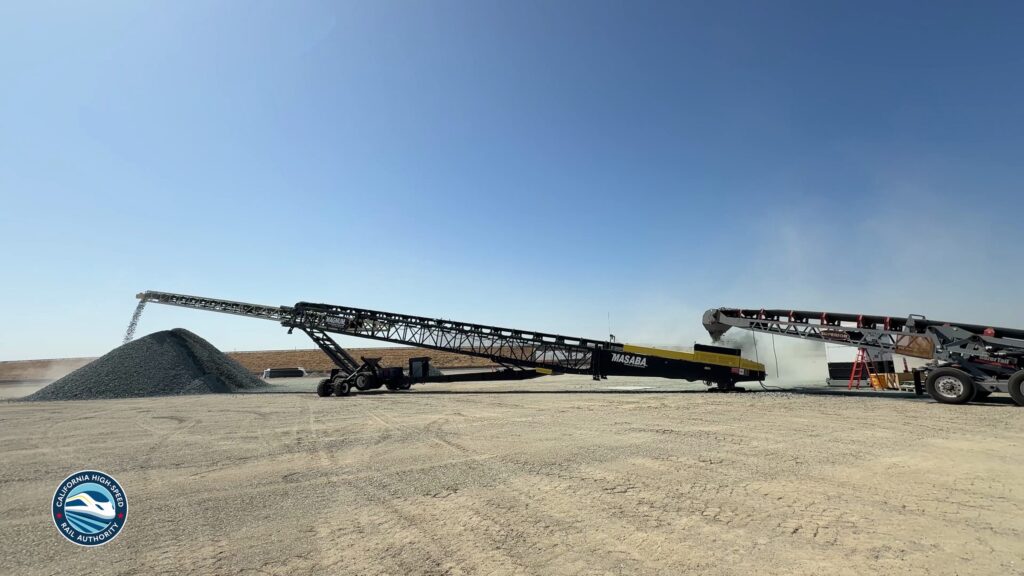
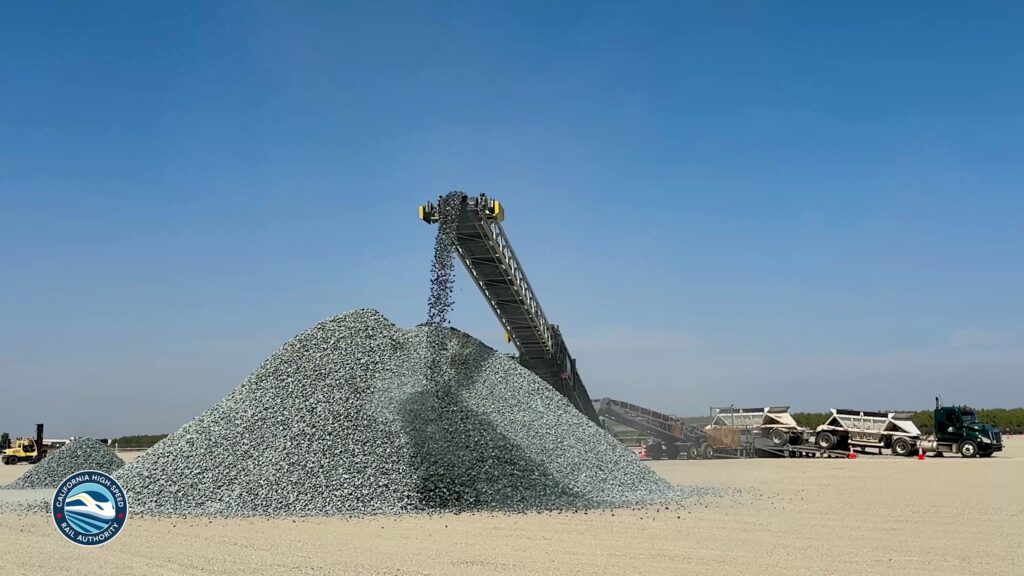
In a video posted by the Authority on Monday, officials said the ballast rock that will form the foundation of the track, along with hundreds of sections of cable trough, has already been delivered to the Central Valley construction site.
Deliveries will continue over the next month, leading up to what the Authority calls the “main event”: laying the long welded rail that will make up the first section of track for the project.
Read More: California High-Speed Rail on verge of awarding first bullet train contract
Crews have been receiving ballast for the last several days. In a video shared by the CAHSR last week, officials said construction crews were receiving about 2,000 tons of rock per day.
California High-Speed Rail track laying timeline
Officials say that actual track is expected to be laid in just a few months, and it all starts with the arrival of the crucial ballast layer.
Ballast is a layer of crushed rock that sits beneath the track. It holds ties in place, helps drain water and spreads the weight of a passing train.
In addition to the ballast, cable troughs will be cut alongside the track to carry the signaling and communication lines to make the system work.
Officials say both the ballast and the cable troughs need to be in place before any rail goes down.
The materials are arriving piecemeal, and that’s on purpose.
When the Authority approved a track and systems contract in June, officials said items with long lead times, including rail, concrete ties and ballast components, were already on order. In March, officials announced that construction of a 150-acre railyard and staging area in Kern County was completed and ready to receive those shipments and get them to the work sites.
A group of American construction firms, Kiewit, Stacey Witbeck and Herzog, will install the track, overhead electrical systems and communications infrastructure along 119 miles of completed guideway in the Central Valley.
Why hasn’t California laid any high-speed rail track yet?
If you’ve followed the news about the California bullet train project, you already know this. But, yes, no tracks have been laid for the California High-Speed Rail yet.
That fact is often a punchline for critics of the project, including Transportation Secretary Sean Duffy and President Donald Trump.
But as industry experts and advocates have repeatedly said, laying down track is actually one of the quicker parts of building a railroad.
The real challenges so far have been everything that came before it: design, land acquisition, utility relocation, environmental clearance and the numerous lawsuits.

Once materials arrive over the next several weeks, the “main event” will eventually take place: laying the “long welded rail.”
Long welded rail is as the name implies. The rail is welded into long, continuous strings instead of bolted sections. It’s become the common practice for high-speed rail projects because the continuous rail allows for a smoother, quieter ride at high speeds.
Officials have not given the exact date for when the long welded rail will be laid, but said it will happen once all materials are on site.
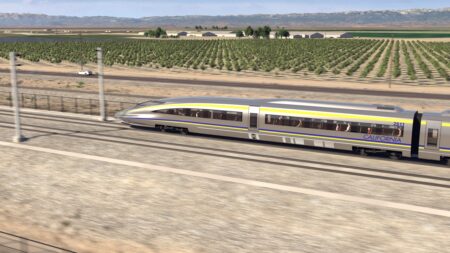
After Wednesday’s board vote, we will at the very least know what types of trains will be rolling on these tracks at speeds of up to 220 mph. The Authority Board of Directors is set to vote to award train manufacturer Siemens the contract to build three high-speed trains, as well as provide spare parts, service and maintenance for the next decade-plus.
Until then, supporters of the project will have to show enthusiasm for thousands of tons of rock, while detractors will continue to ask: where are the tracks?
In just a few months, both will have to turn their attention to a new issue facing the beleaguered project: how are they going to tunnel through those mountains?
Regardless of your thoughts on the California High-Speed Rail, there are ample resources for tracking the project.
The Authority provides updates on construction progress at BuildHSR.com, as well as on social media.
As of Monday, the Authority says more than 65 structures and 82 miles of guideway are now complete. That is up from about 60 structures and 80 miles when the board approved the track-laying contract in June.
The Authority also expects to complete environmental clearance for the last remaining segment of Phase 1, between Los Angeles and Anaheim, in the coming weeks. San Francisco to Los Angeles has been fully approved since June 2024.
For more stories like this, follow Rail and Runway on Instagram and Facebook.
View this post on Instagram